How to grow woad
how to grow a flower almost as tall as you

Most people know woad as a dye plant.
The plant that was used to make blue dye long before synthetic dyes existed.
But I think it deserves far more attention as a flower.
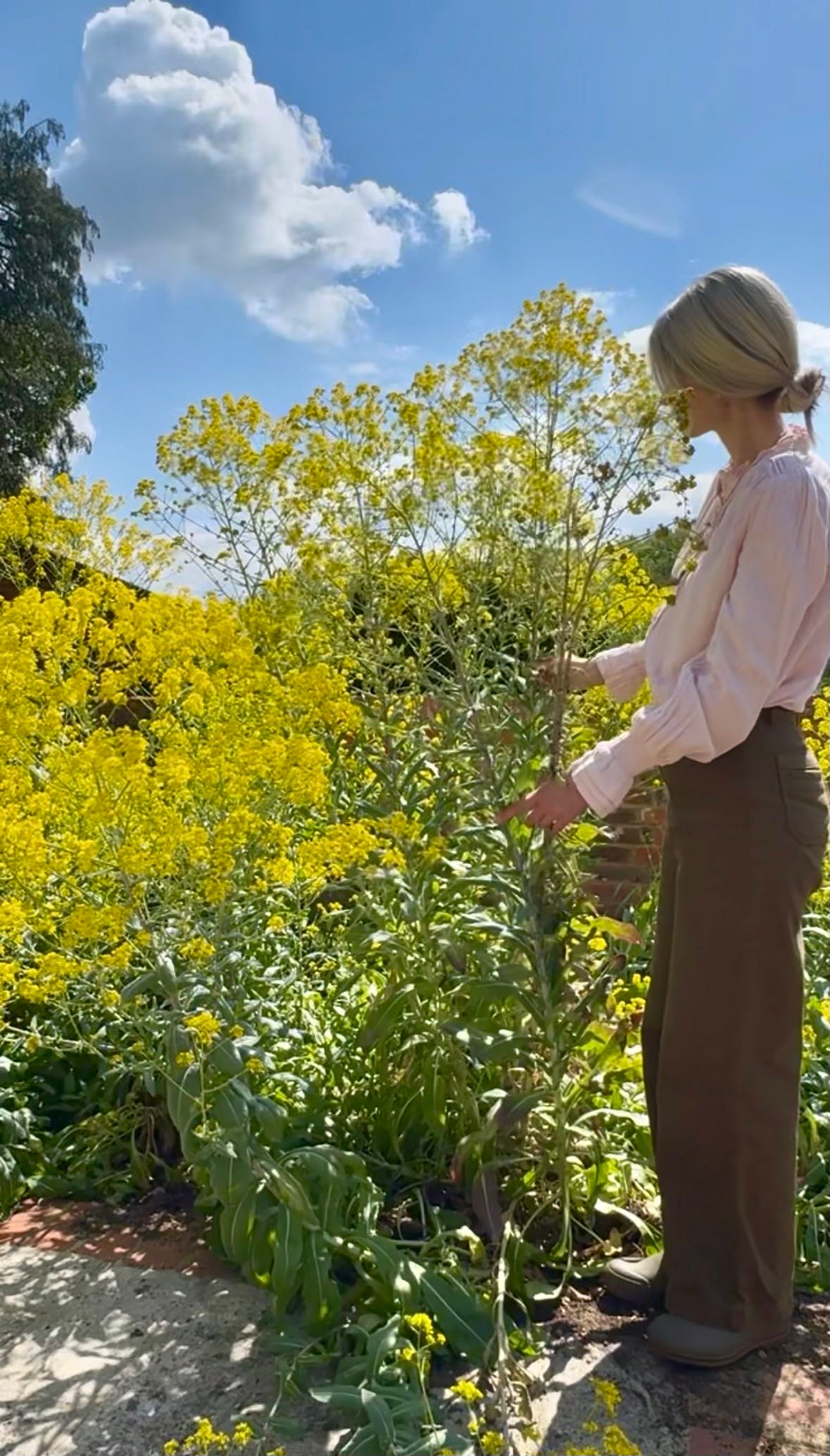
The first time I grew it properly, I remember thinking how strange it was that a plant famous for producing blue dye actually flowers yellow. Not just yellow either. Clouds of tiny soft yellow flowers that hover above the garden and catch the light beautifully in early summer.
It has movement to it. Height. That slightly wild look that makes arrangements feel softer and more natural.
And once you’ve grown it once, you start noticing just how useful it is.
Not necessarily as a focal flower. More as something airy and architectural that fills space between heavier blooms.
What actually is woad?
Woad is Isatis tinctoria, a biennial plant in the brassica family. So technically it’s related to cabbages, mustard and broccoli, which does make sense once you look closely at the flowers.
In the first year, it forms a low rosette of blue green leaves close to the ground. Quite dramatic foliage actually. Silvery blue and very sculptural.
Then in the second year it sends up tall stems covered in sprays of tiny yellow flowers.
And tall really does mean tall.
Mine easily reached chest height and some plants can grow taller than that, especially in fertile soil. Around 1.2 to 1.5 metres is fairly normal.
It feels quite dramatic in the cutting garden because it suddenly appears above everything else.
Why I think flower growers should grow it
I think flower growers are always searching for flowers that create movement.
Not everything in an arrangement can be a focal bloom.
You need flowers that soften the edges. Flowers that catch the light. Flowers that make arrangements feel less stiff.
That’s where woad comes in.
The flowers almost create a haze through bouquets. They work particularly well with:
• roses
• sweet peas
• orlaya
• ammi
• nigella
• scabious
• grasses
• cow parsley style flowers
It has that same airy quality people love in wildflower arrangements.
The seedheads are beautiful too. Once the flowers fade, the plant produces dangling flattened pods that dry well and add texture to arrangements later in the season.
How to grow woad
Woad is surprisingly easy to grow in the UK.
It likes full sun and well drained soil. Mine coped perfectly well in ordinary garden soil and didn’t need constant attention.
I actually think it suits slightly rougher growing conditions better than rich pampered borders.
Sowing
You can sow woad in spring or late summer.
If you sow in late summer, the plants form strong rosettes before winter and usually flower the following year.
That’s personally how I would grow it for flowers.
Sow seeds shallowly. They don’t need burying deeply at all. Lightly cover them and keep watered until germination.
They germinate fairly quickly. Usually around one to two weeks.
Once seedlings are large enough to handle, space them properly. This is important because they become large plants.
I’d allow around 30 to 45cm between each plant.
A few things worth knowing before you grow it
It self seeds.
Quite enthusiastically.
So if you let seedheads mature and drop naturally, you will probably find woad appearing again the following year.
Personally I don’t mind that in a cutting garden. I quite like plants wandering slightly. But if you prefer a very controlled border, you’ll want to deadhead before seed fully ripens.
Because it’s a brassica, I’d also avoid planting it repeatedly in the exact same place every year.
How fast does it grow?
Pretty fast for a biennial.
The first year is mainly leaf growth and root establishment.
Then once spring arrives after winter, it suddenly rockets upwards. The growth spurt is impressive.
One minute it’s sitting quietly as a low rosette and the next it’s towering above nearby flowers.
Can you grow it for dye as well?
Yes. In fact, that’s what woad is famous for.
The blue dye comes from the leaves, not the flowers.
Historically it was used across Europe to dye fabrics blue long before imported indigo became common.
The interesting thing is that the best dye comes from first year leaves before flowering begins.
Once the plant starts producing flower stems, the dye quality drops.
So realistically, if you wanted to grow woad seriously for both flowers and dyeing, I would grow two separate patches.
One patch for harvesting young leaves.
One patch for flowering.
Vase life
Woad is not what I’d call a marathon vase flower.
It’s more of a fresh garden flower.
Condition it well and harvest in the cool of the morning if possible.
Straight into water immediately after cutting.
I’ve found flowers like this are best used very naturally rather than expected to last for weeks.
But that’s part of their charm really.
Not every flower has to behave like a supermarket chrysanthemum.
Some flowers are beautiful because they feel fleeting and seasonal.
And woad definitely falls into that category.
My thoughts
I think woad is one of those plants that surprises people.
It sounds historical and medicinal and slightly serious when you first hear about it.
Then you grow it and realise it’s actually incredibly beautiful.
Soft yellow flowers. Blue grey foliage. Pollinator friendly. Tall stems moving in the wind.
And for flower growers especially, it fills that awkward gap between structure and softness perfectly.
I honestly think more cutting gardens should be growing it.